Monday, 17 February 2014

8 Giant Buddha Statues in china

China is a great Buddhist land, with Buddha statues of all sizes rising up through history. Those Buddha statues are not only dedicated to Buddhist deities, but also beautiful contributions to the religion art and aesthetics. Listed here are the most famous and charming Buddha statues in China, which remain to be, despite huge tourist attractions for making pilgrimages, really peaceful and spiritual places. And some of which are among the largest in the world.
The Spring Temple Buddha in Lushan County, Henan Province 河南鲁山大佛

The Spring Temple Buddha

Built in 1997, the Spring Temple Buddha has become the world’s tallest Buddha and the world’s largest statue since its completion. The Buddha is made of bronze, weighing 6400 tons, and reaches up to 208 meters from the base of its pedestal to the top of its head, with Buddha body of 108 meters high.

Statue of Sakyamuni at lingshan Park in Wuxi, Jiangsu province 江苏灵山大佛

Statue of Sakyamuni at lingshan Park

The 88-meter-tall Statue of Sakyamuni at lingshan Park stands aside the beautiful Taihu Lake, with its three sides surrounded by mountains. The location is regarded as a rare Buddhist land. The Buddha is connected by 1560 pieces of bronze plates, and adopts some modern high technology, such as advanced windproof, shockproof measures and lightning protection.

Of the 408 visitors who reviewed the Buddha on Tripadvisor.com, half of them thought it was “excellent.”

Leshan Giant Buddha in Leshan, Sichuan province 四川乐山大佛

Leshan Giant Buddha

Located about 125 km south of Chengdu, the world’s largest stone Buddha — the 71-meter-tall Leshan Giant Buddha was built in 713 during China’s Tang dynasty and finally completed almost 90 years later. The giant Buddha sits in the cliff, overlooking the confluence of Min, Dadu and Qingyi River. A famous saying goes that, “The mountain is a Buddha, and the Buddha is a mountain”. Leshan Giant Buddha is now a UNESCO World Heritage site.

Tian Tan Buddha in Lantau Island, Hong Kong 香港天坛大佛

Tian Tan Buddha in Lantau Island, Hong Kong

Tian Tan Buddha, also known as the Big Buddha, is the largest outdoor sitting Buddha statue worldwide. Completed in 1993, the 34-meter-high Buddha is the main attraction of the Po Lin Monastery, and a major landmark in Hong Kong. Buddhists and visitors can take the 20-minute Ngong Ping cable car ride to get there.

Kwan-yin Bodhisattva Statue of South China Sea in Sanya, Hainan 海南三亚南海海上观音

Kwan-yin Bodhisattva Statue of South China Sea in Sanya

The Guanyin Bodhisattva stands erecting on the South Sea, and is the major highlight of Sanya Nanshan Buddhism Culture Park. It is made of white holly and 108 meters high (the highest of its kind). Kwan-yin Bodhisattva statue of South China Sea stands for Oriental world’s spirit – peace, wisdom and mercy.

Samantabhadra Bodhisattva Golden Statue on Mt. Emei, Sichuan province 四川峨眉山金顶四面十方普贤金像

Samantabhadra Bodhisattva Golden Statue on Mt. Emei

The world’s highest golden statue – the 48-meter-high Samantabhadra Bodhisattva Golden Statue on Mt. Emei is Samantabhadra’s first artistic modeling and again the proof of Mt. Emei’s status as one of four sacred Buddhist mountains in China.

Outdoor ksitigarbha Bodhisattva Statue on Mt.Jiuhua, Anhui 安徽九华山地藏菩萨露天铜像

Outdoor ksitigarbha Bodhisattva Statue on Mt.Jiuhua

The 99-meter-tall outdoor ksitigarbha Bodhisattva Bronze Statue stands on Mt.Jiuhua - one of four sacred Buddhist mountains in China (featuring extraordinary landscape) and is among the highest and largest Buddhas in the world.

Guanyin of the South Sea on Mt.Putuoshan, Zhejiang Province 普陀山南海观音

Guanyin of the South Sea on Mt.Putuoshan

Guanyin of the South Sea of Mt. Putuoshan was built in 1998 and made of bronze, limestone, marble and gold. The statue totals 33 meters high from the supporting base to the head, suggesting 33 layers of sky in Buddhist doctrine. Now this imposing statue has been the most visited place for worship by pilgrims.

Saturday, 8 February 2014

8 Cool Things to Buy in China

The idea of buying souvenirs in China – one of the world’s oldest countries, can be multifarious. With fabulous antiques occupying many of shopping streets, various arts and crafts fill the tourist-populated areas. But what are the coolest things, special yet affordable, which are worth collecting?

Cheongsam (Qi-pao)


Cheongsam has been regarded as the model of Chinese traditional clothing culture. It is a body-hugging one-piece dress that fully displays the civility, elegance, grace and modesty of Oriental women, and outlines perfect female curve! Nowadays, Qi-pao is also a nice choice for dinner party and formal occasions. For ladies who want to buy Qi-pao in China, try to custom one according to your figure, instead of buying a ready-made one.

Silk and silk products


For thousands of years, Chinese silk has been universally celebrated for its superior quality, exquisite patterns, gorgeous color and rich cultural connotations. Today the silk from Suzhou and Hangzhou retains the best example of Chinese silk. When come to China, many visitors would like to buy some thin, soft and smooth silk products, such as silk Qi-pao, silk pajamas, silk scarf, silk tie and other accessories.

Handmade crafts


Given its vast territory and versatile nation minority, China has the world’s most diverse handicrafts, interesting and absorbing each cultural essence: embroidered clothing, embroidered slippers, bags, hand-knitted clothing, opera masks, papercuts, Chinese knots, Chinese seals, Inner-painted Snuff Bottle, chopsticks, clay figurine, carving…

Chinese calligraphy and paintings


Chinese calligraphy and paintings are the essence of Chinese art, and no doubt one of the best souvenirs for foreign travelers. In Beijing, Panjiayuan (潘家园) and Silk Street (Xiu Shui Jie 秀水街) are heavens for collectors of cheaper traditional Chinese art and kitsch, where you will find different sized of brushes and different styles of paintings and calligraphy.

Tea


Tea is a must for your China trip. Chinese tea can be classified into several categories according to the different methods by which it is processed, mainly including black tea, oolong tea, green tea and scented tea. Most famous teas in China include West Lake Dragon Well, Dongting Biluochun, Yellow Mountain Maofeng, and Wuyi Rock Tea.

Porcelain


Chinese porcelain, known as “fine china” among Westerners, is one of the greatest achievements of Chinese artworks. China is well known by the world partly due to its porcelains. They integrate perfectly practicality and aesthetics, technology and art. Jingdezhen in the northeastern part of Jiangxi province has been honored as the Porcelain Capital of the world for over 1800 years. And “the blue and white porcelain” is the most famous type of Jingdezhen porcelain.

Traditional Chinese medicine (TCM)


Traditional Chinese medicine (TCM) theory is based on the philosophy concept that the human body is a small universe with a set of complete and sophisticated closely-related subsystems, and pays attention to assisting the balance of the human body and letting its healing system do its job. They are five major TCM treatment modalities: herbal medicine, massage, acupuncture, operations with needles, and operations with Fire.

Four treasures of the study


In the old days, one needed brush, ink stick, paper and ink slab to write and paint, which are called the four treasures of the study. And now they become one of the most famous popular souvenirs among visitors to China. Especially the ink slab, made of stone, is strictly selected. The famous production centers of the ink slabs are Duanzhou in Guangdong, Shexian County in Anhui, Shandong and Lintaohe in Gansu

Monday, 27 January 2014

Snow Town: the Homeland of Snow in China

If visiting Northeast China in winter, one is expected to be completely intoxicated with the celebration mood and beautiful snowscape. There are at least two winter destinations you should not miss – Harbin, with lively and exciting International Snow and Ice Festival, and lesser-known China Snow Town, a real snow fairyland featuring thick, abundant, high-viscosity and high-quality snow.

China Snow Town

Where is China Snow Town?

Snow Town, also known as Xuexiang in Chinese, is formerly named Shuangfeng Forest Farm. It is located at an elevation of 1500 meters in Hailin city, northeast China’s Heilongjiang province, and 280 kilometers from Harbin city. With a snow period lasting for 7 months (from late October to next May) and the average snowfall reaching 2 meters, it is now celebrated as the hometown of snow in China.

China snow town

What to see and what to do in Snow Town?

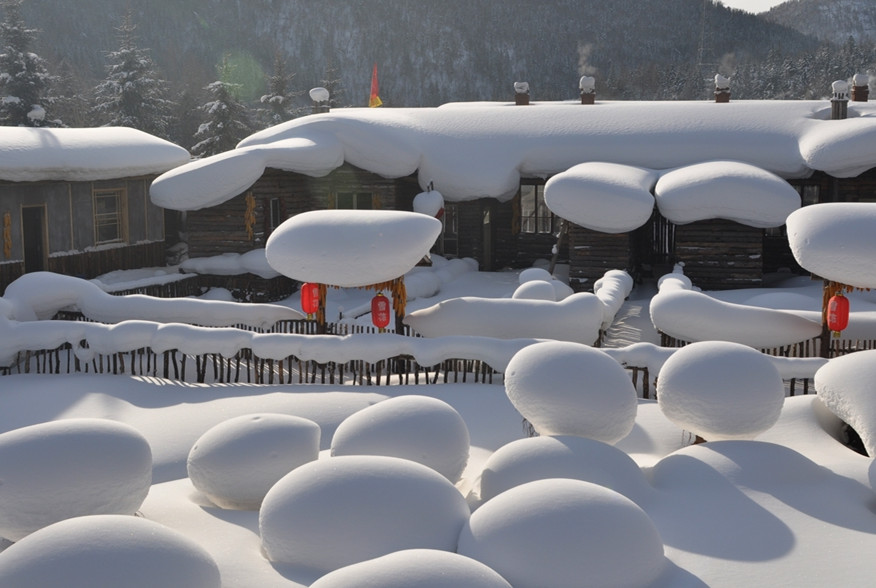
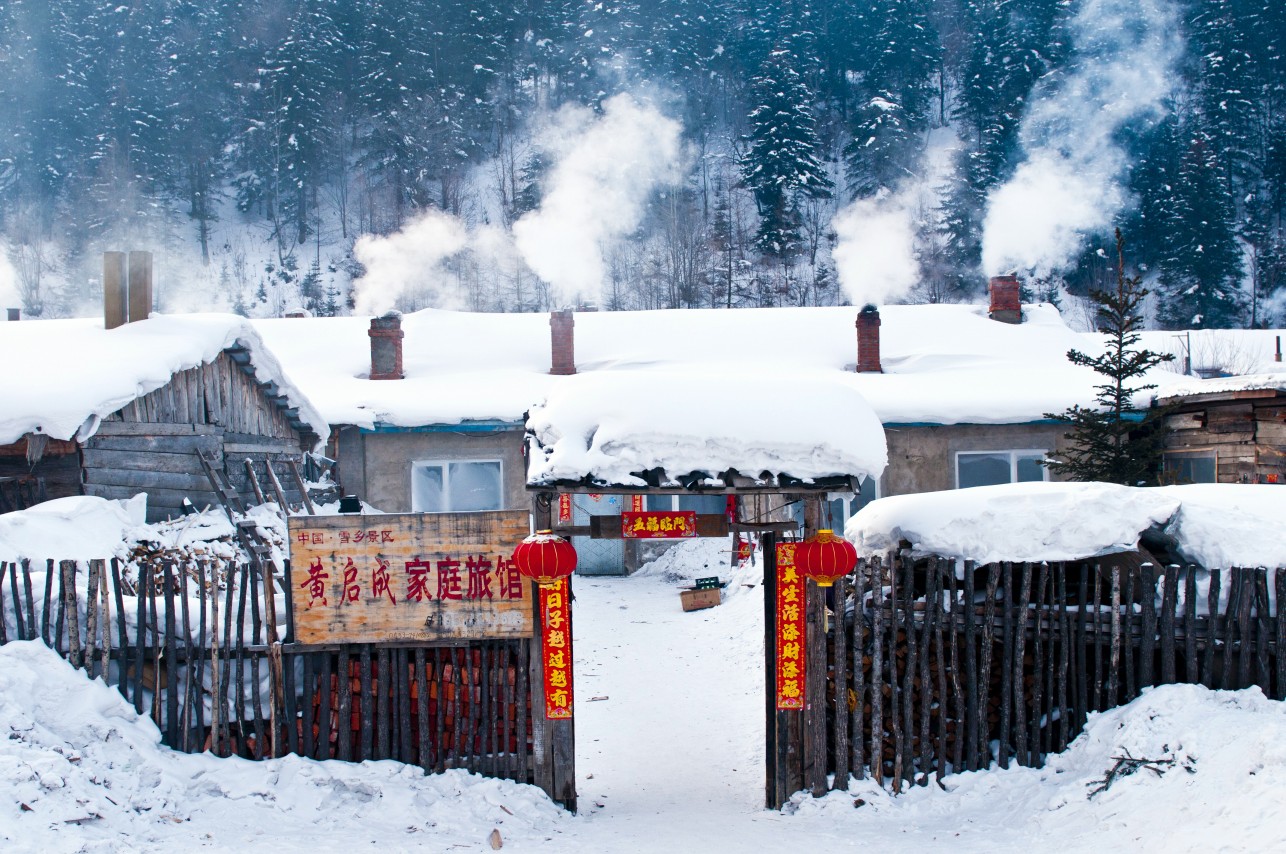
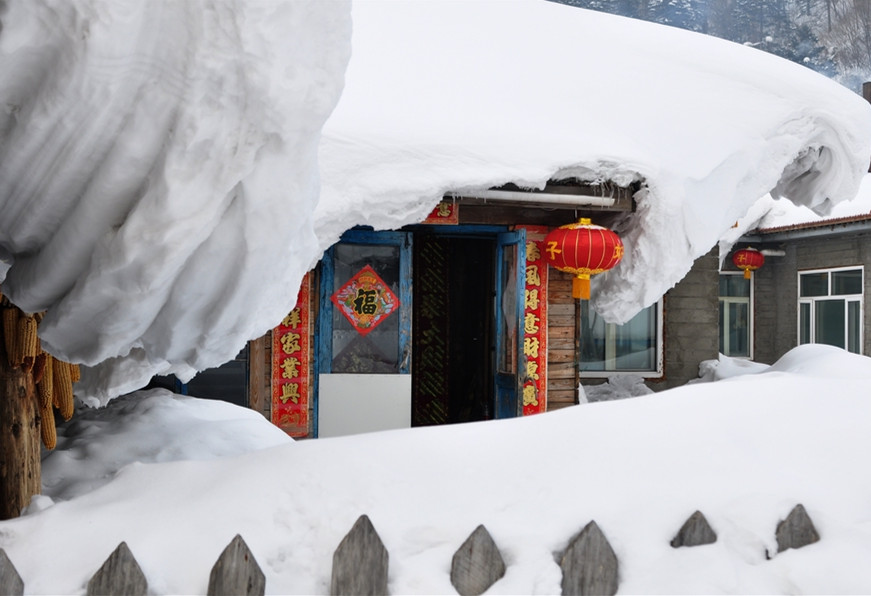
Snow Town comes to be known thanks to some international prizewinning images which bring the public purely beautiful landscape: a hundred Northeast folk houses are covered by heavy snow and connected together, forming various shapes like running horses, huge rabbits, mushrooms… Smoke curls up from kitchen chimneys. Snow hangs from the roof to the ground, creating a unique scene of “snow curtains”.

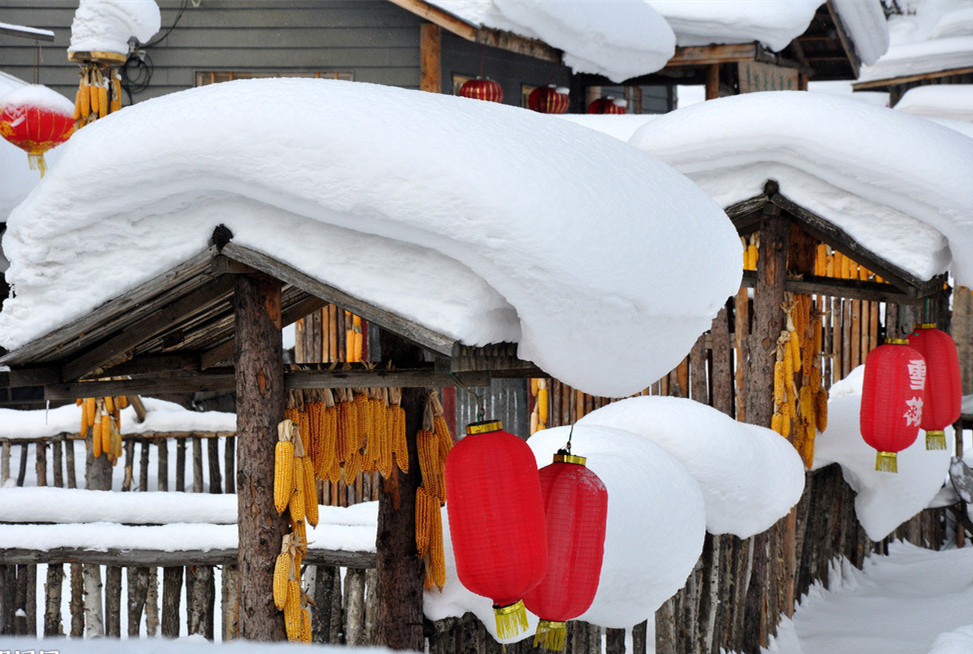
Spring Festival (China’s New Year Festival) endows Snow Town a especially joyous ambient. Fireworks and big red lanterns hanging up in front of each house brighten the snow in night, and make it a colorful world.

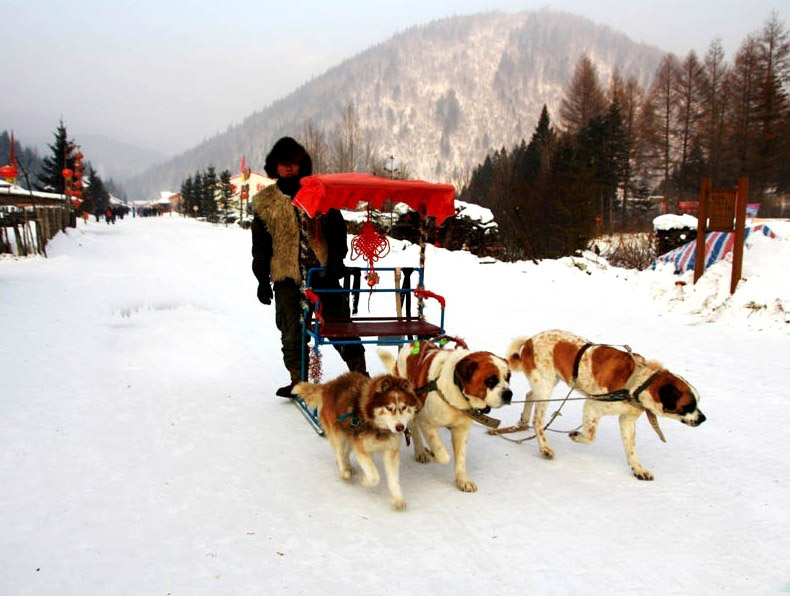
In snow Town, make sure not miss wood buildings, racecourses, rimed pines, white birch forests, and stunning sunrise on Yangcao Mountain, as well as snow activities like snow skiing, snowmobiling, horse/dog-sled…

night scene


What is the best time to visit Snow Town?

Generally speaking, January, February, March, November and December are the best time to travel there. It starts to snow in late October, but the snowscape has not shaped up until mid to late November with snow thickness of about 30-40 cm. Snow Town will not see many tourists in November and early December, making it an enjoyable time for those who prefer quietness. While February and March is the best season for photography, when it snows most frequently with the biggest snowfall of the year.

Folk House

Travel tips to Snow Town:

1. The average temperature in Snow Town is minus 15-30 degree Celsius.
2. So have enough clothing and warm boots to keep yourself from freezing outside, and also keep your camera warm to work with battery.
3. Bring some medicines in case of getting cold.
4. Sunglass against snow-blindness is a must.
5. Prices of hotel room and entertaining activities will run up during the Spring Festival and New Year Day.

Red lantern and corn
dog-sled

Monday, 20 January 2014

10 Best Places in China for Winter Birding

If you are lazy in winter, you may have missed some touching moments going on in the wild. Why not pack your bag and bring your camera to China’s top ten best destinations for birding in this winter time, to escape the daily grind and simply enjoy the beauty of nature. Bird-watching must be one of the best ways to relax your mind and attain inner peace.

Xinjiang Bayanbulak Swan National Nature Reserve 
Xinjiang Birding

400 km northwest of Korla, high-altitude Bayanbulak wetlands lies within the second largest grassland area in China (at 2,300-2,500 m), with Kaidu River flowing through. It is celebrated as the famous “Xinjiang Swan Lake”, a natural habitat for the largest populations of wild swans in China. Each year birds migrate to Bayanbulak between the months of November and March. Make sure you have your cameras ready to capture some touching moments, when the birds’ wings are fanning.

Rongcheng in East China’s Shandong province
Rongcheng Birding

As the winter comes, thousands of swans from Siberia fly to Rongcheng Swan Lake for wintering, the largest winter swan habitat (covering an area of 10,500 hectares) in China, and one of the top four swan lakes in the world. The elegant swans walking, singing and dancing, creating a beautiful and peaceful picture.

Caohai Nature Reserve, Guizhou
Caohai Nature Reserve, Guizhou

Located in Weining, Southwest China’s Guizhou province, Caohai Nature Reserve is one of the best places in China for winter birding. Every year, the black-necked crane, the only plateau crane worldwide, will pass the winter time here, when visitors will have chance to enjoy the sight of black-necked cranes in flocks and any other 300 bird species.

Poyang Lake
Poyang Lake Birding

Poyang Lake in Jiangxi Province is a should-not-miss destination for winter birding. It has a total of 310 species of birds and is famous for being the “Kingdom of the stork”. A large number of rare birds habitat here, including Grus leucogeranus, Grus japonensis, larus relictus… In winter time, a maximum of 100,000 migrating birds fly to the Lake, making it the largest migratory bird wintering area in Asia.

Dongting Lake Birds Natural Reserve
Dongting Lake Birds

Dongting Lake Birds Natural Reserve (covering an area of 190,000 hectares) in Hunan province has earned the reputation of the “paradise of birds” among bird-watching fans. Every winter, more than 300 species of birds, totaling one million, come to Dongting lake and make the wetland area their home.

Dongtan Wetland in Chongming Island
Birds in Dongtan Wetland

Chongming Island finds itself about 100 km away from downtown Shanghai, and boasts one of the best winter birding parks – Dongtan Wetland. Established in 2003, this 24-square-kilometer park is China’s only wetland park neighboring a migratory bird reserve. Every year from November to next February, an annual birding Festival will be held in Dongtan Wetland, when it welcomes the highest number of birds of the whole year.

Yunnan
Xishuangbanna Bird-watching

Due to its mild and warm climate in winter, there are numerous excellent winter bird-watching destinations in Yunnan. Red-billed gulls from Siberia has spent winter in Kunming for almost 30 years. Dianchi Lake and Cuihu Park are best places to watch red-billed gulls in Kunming. Besides, Botanical garden in Xishuangbanna of tropical climate offer opportunity to see Crimson Sunbird and Anastomus oscitans. While Napa Lake wetlands in Shangri-la is home to “noble birds”, such as black-necked crane, in winter, attracting lots of people to photograph.

Yancheng Wetland Nature Reserve
Yancheng Wetland birding

Lying on China’s eastern shore, Jiangsu province, Yancheng is the largest coastal wetland reserve in China and home to Red-crowned Cranes and other 381 species of birds. Best time to watch birds in Yancheng is between late October and early April, when about 600 Red-crowned Cranes prefer wintering here.

Zhalong Nature Reserve in Tsitsihar

Located in Tsitsihar, northeast China’s Heilongjiang province, Zhalong Nature Reserve was established in 1979 with the purpose of protecting a large number of Red-crowned Cranes. It is also a stopover and nesting area for a great quantity of storks, swans, herons, grebes and other species.

Dongzhaigan Mangrove Forest Nature Reseve in Haikou
Birding in Haikou

Dongzhaigang Mangrove Forest lies in Yanfeng Town, Haikou City of Hainan Province (belongs to the tropics marine climate). It is not only a national mangrove reserve, but also a wetland of waterfowl habitat. During the winter, the best season for birding in Dongzhai Harbor, tens of thousands of birds turn the area into a wonderland.

Monday, 13 January 2014

ETC 2013 Annual Meeting Falls on Jan 8th

Of all the company events during the whole year, the annual meeting, no doubt, remains the main attraction for we easytourchina team! Our 2013 annual meeting just fell on Jan 8th 2014 and was held in Jinzhongshan Holiday Resort, 48 km north of Guilin downtown. The 7- square-kilometers Jinzhongshan Holiday Resort features Longevity culture, as well as original ecological forests, karst topography wonder and nice hot spring. it was so comfortable and interesting to have the company party there! 
Our gereral manager Wei was giving a speech
The meeting began with our managers’ speech, summarizing 2013's work, expressing their gratitude to employees and motivating the passion for work, followed by dinner banquet with tasting local dishes. With the 2014 Horse Year is coming, we toasted and sent wishes to each other.
Dinner Time
And then activities time was coming! One important feature of ETC’s annual meeting was that we always paid much attention to the staff interaction and entertainment. This year, we had advertisement performance time, lottery draw time, and watched an amazing video recording dribs and drabs of the whole team’s company life made by our technical staff, winning everyone’s praise. 
Performance Time
Group Picture
The next day, on Jan 9th, we hike to Tian Keng, a karst topography wonder and a nice complex of caves and stones. It is the only Karst cave in Guilin which you can go into it from the base. Hiking along it, we heard the clear water dropping, smelt the fresh air from the nature, watched the rare species from centuries ago…
karst topography wonder in Yonfu, Guilin
Tian Keng

Monday, 6 January 2014

Guilin-Beijing High-Speed Train Service Opens

Good news: China’s eight major high-speed lines project – “four horizontal and four vertical” has taken shape with several new lines’ operation on December 28, 2013, including Guilin–Beijing line, Xiamen-Shenzhen line and Shanghai-Harbin line.
High-speed Train Tours  recommended by Easytourchina
New HSR lines Open in China
China’s high-speed train
High-speed service reduces the travel time from Guilin, picturesque city in Guangxi Zhuang autonomous region, to Beijing from 26 hours to 10.5 hours. And Amazingly, this time there are totally four new lines opened in Guangxi. Given that Guangxi is the only region in China linked to Southeast Asia, international travelers and businessmen (especially those from Southeast Asian Nations) will also be benefited from these newly high-speed railways in easy reach of the country’s capital city Beijing or Guangxi’s other ethnic group regions, like Liuzhou and Nanning.
New HSR lines Open in China
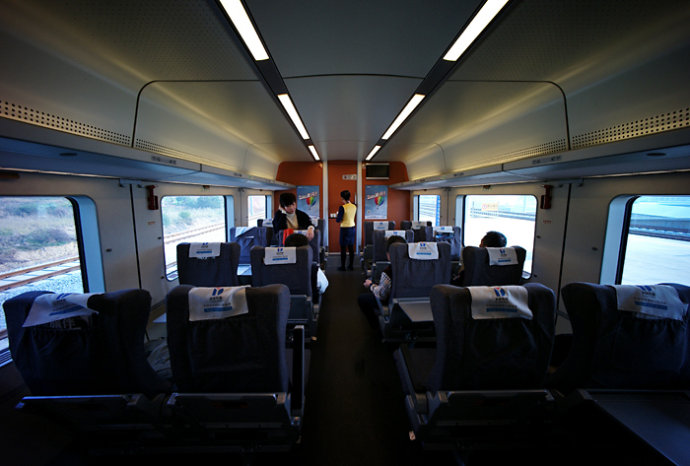
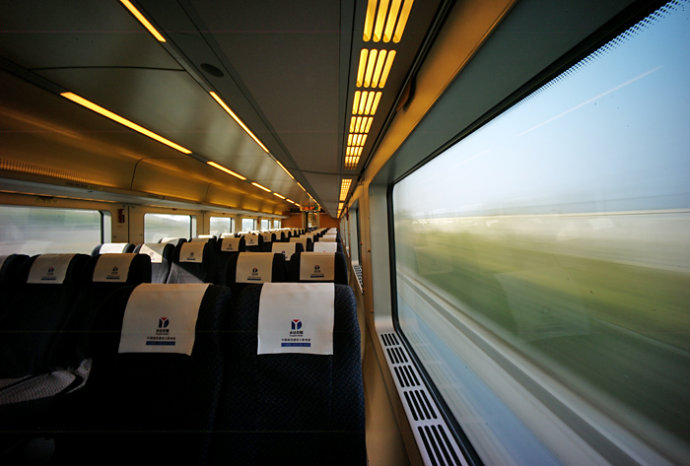
The second-class seats of high-speed train
Another remarkable railway is from Xiamen to Shenzhen, which rails along Xiaman, Shantou, Shenzhen and other five cities in Fujian and Guangdong provinces, and connects Shanghai and Hangzhou in eastern China. Xiamen-Shenzhen high speed railway runs at 200 km per hour, and takes only 3.5 hours instead of around 12 hours before. This will surely promote the economic development along the railway and greatly alleviate the traffic pressure.
New HSR lines Open in China
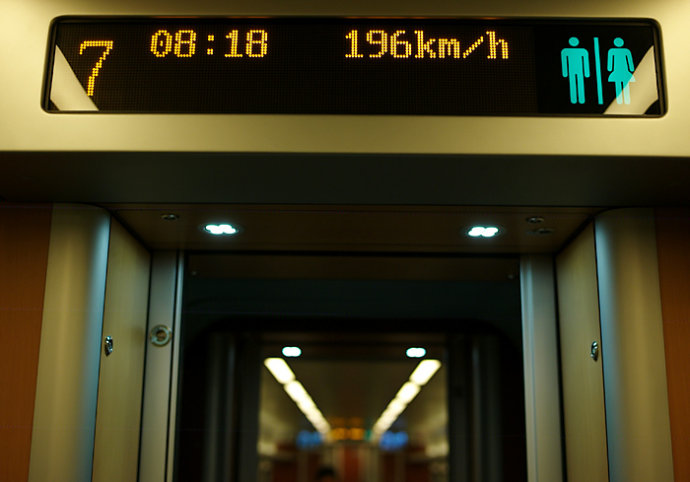
The train runs at 196 km/h
High-speed railway from Shanghai to Harbin also began operation on Dec 28, cutting passengers’ travel time to less than 13 hours. It runs between Shanghai’s Hongqiao Station and frigid cities in the northeast China: Harbin, Changchun, Shenyang and Dalian…
New HSR lines Open in China
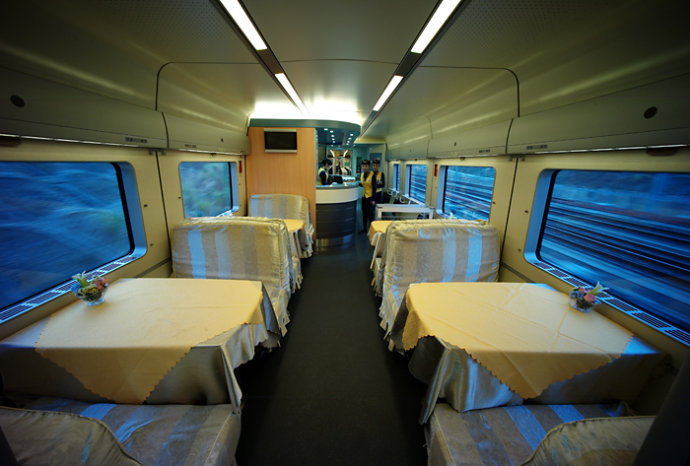
The restaurant on the high-speed train
All together 68 train services have been put on the new schedule. Now China has the largest high speed railway network worldwide with over 10,000 km of route in service (which is expected to hit 19,000 km by 2015), including the world’s longest line, the 2,298 km Beijing–Guangzhou High-Speed Railway, which carries nearly 100 million people at its first year.

New HSR lines Open in China
The first-class seats of high-speed train)
New HSR lines Open in China
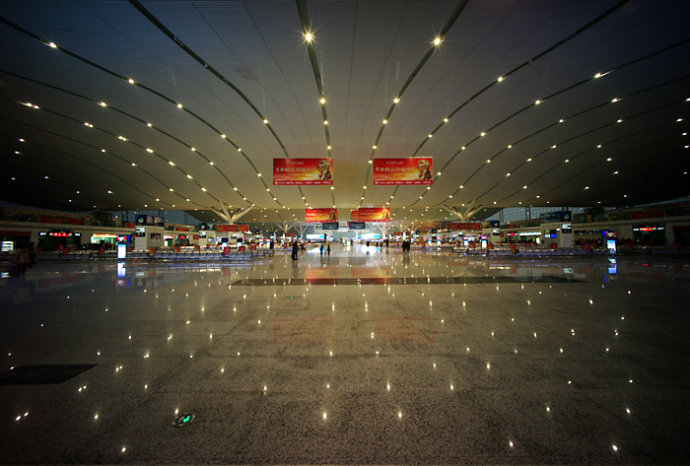
The waiting hall of Shenzhen high-speed railway station

Sunday, 29 December 2013

Immerse in the Tranquility of Small Goose Pagoda &Xian Museum

At the end of the year, I was received a reward with a delightful tour to Beijing, Shanghai, Suzhou and Xian. Ancient capital City Xian was my first stop. It gripped me soon after I set foot on the land. Many places there retained their ancient names, like Hanzhong (汉中), Xianyang (咸阳), Lintong (临潼)… which were very important military, cultural or political towns during China’s Qin Dynasty ((770-476 BC).


A visit to Xian surely focused on museums such as Terra-Cotta Warriors and Shaanxi Provincial Museum, and the old architectural structures, such as the Old City Wall. And the Small Goose Pagoda & Xian Museum standing in the same place offered both museum and old buildings.

1300-year-old Small Goose Pagoda was thirteen stories tall (originally 15 stories), reaching 43.3 meters (142 feet). it was smaller than the Big Wild Goose Pagoda, so the name was given to it. Look closer, I found the outer appearance has been slightly damaged. It was due to more than 70 great or small earthquakes. However, the multi-eave brick pagoda still stood steadily, showing ancient craftsmen’s superb architectural skill!


Today, small Goose Pagoda area was built into an elegant park, a perfect mix of history, Buddhism and peace. Dozens of Chinese scholar trees were planted accompanying Small Goose Pagoda and Jianfu Temple in Tang dynasty (618-907). I also noticed the “Yanta Tower Morning Bell”, which was made by iron weighing at 8000 kilograms, 3.55 meters high, with edge diameter of 2.5 meters. I was told that it was one of the eight major cultural sites of Shaanxi province and the sound it made that could be heard over three miles away. While Xian Museum was a historical and cultural site with a collection of 130,000 pieces of relics from different historical periods to help us learn the history of Xian, when enjoying the peaceful and relaxed time.