Showing posts with label Beijing. Show all posts

Tuesday, 8 April 2014

Discover the Beautiful Ancient Architecture in Beijing

Given its long history of over 3000 years and the great culture tradition, Beijing offers a lot for us to discover, from great historic legacy to small lanes of unique street design, and beautiful ancient buildings. The ancient architecture in Beijing is really haunting and seduce us to deeply explore. Listed here are six sights in Beijing that you should not miss when for the marvelous ancient Chinese architecture.

The Great Wall

春天金山岭

Many people come all the way to China Just for the Great Wall! It’s a real miracle in the world, bearing exceptional testimony to the ancient Chinese civilizations and the achievement of China’s ancient architects. This defensive fortification was first built in the 7th century BC during the Spring and Autumn, and Warring States Periods, and now resemble a huge dragon winding its way through the mountains of North China.


The Forbidden City

故宫_副本

There are many reasons you might want to visit the Forbidden City (the Palace Museum in Beijing. Summer Palace). It was home to 24 emperors during the Ming and Qing dynasties with a history of around 600 years. To discover the architectural beauty of Forbidden City, you should not miss every piece of it, including the roof, wooden door, stone railings, red wall, bronze lions…

Summer Palace

北京

Summer Palace becomes even more popular thanks to Dragon Lady Cixi’s preference. For architecture lovers, it is a big draw, with typical Chinese stone bridge across the Kunming Lake, Buddhist pagodas, watchtower, as well as the complex buildings. It’ll be a nice place to cool off during Beijing’s hot Summer months.

Temple of Heaven

天坛_副本

Built in 1420, the Temple of Heaven is where the ancient Chinese emperors had grand worship ceremony to heaven and earth. No wonder it is a masterpiece of architecture. It is a dignified complex of fine cult buildings set in gardens and surrounded by historic pinewoods. Check carefully on its overall layout, which symbolizes the relationship between earth and heaven-the human world and God’s world according to Chinese architecture culture.


1696
The quaint hutongs in Beijing are some crisscrossing old narrow paths with courtyard houses built on each side. It can be regarded as a window into Beijing folk life. Travel along the hutongs, you may encounter some courtyard dwellings or Chinese quadrangles (Siheyuan), a basic pattern used for residences, palaces, temples, monasteries. You can ride a bike or take a pedicab to have a relaxed hutong tour.


To research the architecture achievement of ancient China, you should not temple and monasteries. Yonghe Lamasery is a Tibetan Buddhist temple first built in 1694 as the residence of Prince Yong of the Qing dynasty. The temple architecture is a combination of Tibetan, Mongolian, and native Chinese. The chief artistic attraction is an 18-meter tall wooden Buddha carved from a single sandalwood tree imported from Tibet, the largest wooden statue on earth.

Wednesday, 10 April 2013

Stay overnight at the foot of Mutianyu Great Wall in Beijing

The outskirts of Mutianyu Town, about one hour driving from downtown Beijing, boasts some of the most magnificent sceneries imaginable, and has been home to two boutique retreats – The Schoolhouse and The Brickyard, both of which offer unobscured views of the Great Wall, and provide visitors a chance to stay out of the hustle and bustle of touristy Beijing.

The Brickyard Inn, Beijing
The Brickyard Inn

Open in 2005, The Schoolhouse was transformed from an abandoned primary school, and now has grown into a comprehensive lodging and dining destination. Later, the owner and designer, Jim Spear discovered “a new land”, the former Brickyard, which was a glazed tile factory always pouring black coal smoke at that time, but as the Mr. Spear said featured with unarguable view! After years of elaborately remodeling, The Brickyard is now famed as a lush eco-retreat with 25 striking guest rooms and cosy services.

The Brickyard Inn, Beijing
the fireplace in the room of Brickyard Inn

Green is the focal point of both Schoolhouse and Brickyard. They also prefer local supplies including foods and employees regarding it as a society mission. For travelers seeking something different, to have a stay at Schoolhouse or Brickyard will be a compelling case.

The Schoolhouse, Beijing
Visitors are appreciating the glassblowing demonstation within The Schoolhouse

There are a lot of things you would like to experience! Feast on excellent western or local foods; visit various art exhibitions and appreciate glassblowing and lamp-working demonstrations by the retreat’s own craftspeople; ramble on through the serene village to feel world away from the chaos of Beijing; relax with the outdoor spa after hikingthe Great Wall; take a morning yoga near a lotus pond. Almost all visitors, though having a short stay, find it is very rewarding, not only the superior retreat amenities and friendly staff, but the abundant activities provided at the foot of Mutianyu Great Wall as well!

The Schoolhouse, Beijing
People are dining and having so much fun in the Schoolhouse

Tuesday, 2 April 2013

Feast on North Korean Food in Beijing

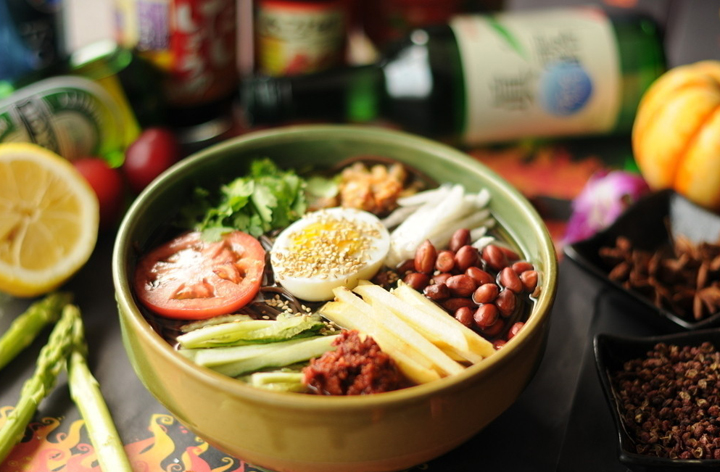
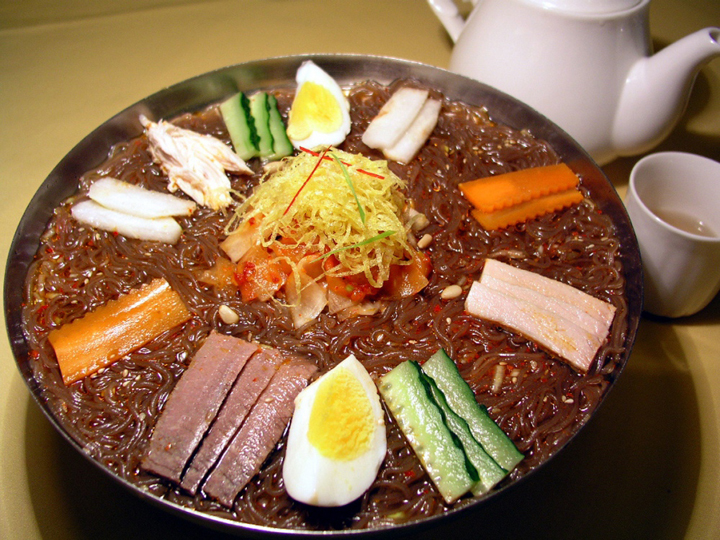
Poverty and enthusiastic leadership-worship is a clichéd image that comes to mind when most westerners think of North Korea, a country of isolation and mystery. Yet North Korean cuisine, that is also something you will never forget about North Korea once you try. You don’t need to get into the country for the specialties, here in Beijing, China’s capital, a handful of restaurants run by North Korean government serves authentic North Korean cuisine. And Pyongyang Restaurant is one of them.


Located at 78 Maizidian Jie, Chaoyang District, Pyongyang Restaurant is specially decorated and offers a large choice of North Korean food at reasonable prices, from cold noodles to bibimbap, from outstanding kimchi to hand-ground porridge, from grilled kalbi to pricy seafood, just delicious! Pyongyang Restaurant share common characteristics with other government-run North Korean restaurants in Beijing, like the training of the waitresses.


All the waitresses in Pyongyang Restaurant are selected from North Korea after two years of training in their hometown. They dress in North Korean traditional robes and shoes, pretty, gently and always with a smile on the face, forming a distinctively beautiful scene. What might surprise you is that each of the waitresses wears a leader’s badge. At night, the waitresses usually sing and perform for diners, including traditional drum dance, karaoke in Korean and Chinese, and a most-welcomed band performance.


Other Beijing's top North Korean restaurants:
The Silver Bank
Add: 4F Zhongfu mansion, 99 Jianguo Lu, Chaoyang District, Beijing (North East of Guomao Bridge)
Tel: 010 6581 8603
Haedanghwa Pyongyang Restaurant
Add: 2F, Kuntai Mansions, Chaoyangmenwai Dajie, Chaoyang District, Beijing
Tel: 010 8561 2925

Tuesday, 26 March 2013

David Beckham's China Tour as Football Ambassador

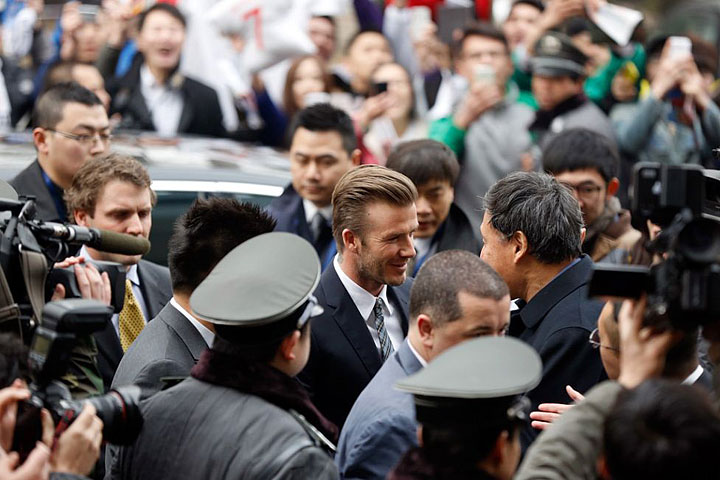
The former England captain, David Beckham arrived in Beijing, capital of China, on March 20 in his private aeroplane. This football superstar was fully loved by Chinese football fans and received a warm welcome and enthusiastic cheering during his short visit. In Beijing, Beckham began his five-day China tour, acting as a “global ambassador” for the Chinese Super League (CSL) – China’s top-flight soccer league, and for the Youth Football Program in China.

Beckham received a warm welcome in China

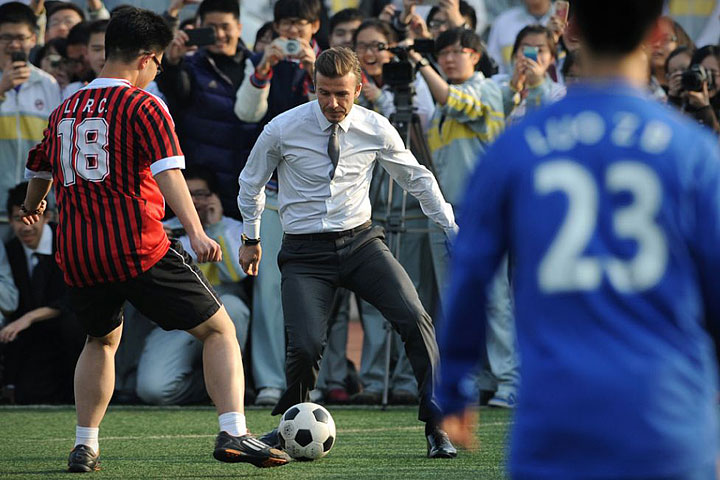
From March 20 to 24, Beckham had a tight schedule in Beijing, Qingdao and Wuhan by visiting local schools and football clubs including Beijing Guo’an Football Club at Workers Stadium, Qingdao Jonoon Football Club as well as Wuhan Zall Football Club. In each city, Beckham met the Chinese footballers, fans and had a kick-around with youngsters. The 37-year-old even tried to demonstrate the perfect free-kick skill in a suit and shoes, but fell flat on his backside.

David Beckham's China Tour
Beckham in Qingdao Jonoon Football Club

At news conference, Beckham explained his focal point of the visit, that was, to educate children and develop Chinese football. However, media believed that Beckham’s role was actually an attempt to further promote the Chinese Super League (CSL) home and abroad and to restore its image after a series of corruption and match-fixing scandals.
Beckham in Beijing
Beckham in Beijing, playing football in suits

Beckham was back to Paris on March 25, where he plays midfielder for Paris Saint-Germain now. Yet, this is not the end of Beckham’s 2013 China tour but the beginning. It is said that Becks will pay another two visit to China later within the year to “fulfill his responsibilities” for the appointment.

Beckham in China
Beckham swarmed by Chinese football fans

Wednesday, 20 March 2013

Forbidden City closed on Monday afternoons 2013

The Palace Museum, also known as the Forbidden City, has decided to carry on with the half-day closure every Monday afternoon for further protection, it announced on March 18, 2013.

the Forbidden City, Beijing
inside the Forbidden City

The museum will open on Mondays from 8:30 am to noon. Ticket sales will stop at 11:00 a.m, and ticket checking will stop at 11:10 am.

The official implementation of half-day closure will start on April 1, except public holidays and Mondays during the summer months of July and August. The new timetable will be applied on the following Mondays.
April 1, 8, 15, 22;
May 6, 13, 20, 27;
June 3, 17, 24;
September 2, 9, 16, 23, 30;
October 14, 21, 28;
November 4, 11, 18, 25;
December 2, 9, 16, 23, 30.

The museum launched a pilot plan to close every Monday afternoon from Jan. 1 to March 31, 2013. The closing time was used to check and renovate cultural relics and facilities.

Monday, 28 January 2013

Experience hutong lifestyle in Beijing

Hutongs in Beijing are alleys formed by lines of siheyuan, traditional courtyard residences. It reflects the culture of grassroots Beijingers and has a very special and significant position in the rich history and culture of Beijing. If you like to make your Beijing tour more perfect, a tour to the Hutong is highly recommended.

Hutong, Beijing
A wonderful glimpse into the world of yesterday in Beijing. 

Hutong, Beijing
Hutong Community (photographed by Sarina Wei in November, 2012)

Hutong,Beijing

Interested in seeing evidence of the history of Beijing, experiencing the old way of life and the traditional culture of Beijing? Then come to Hutong area with me!!

Tuesday, 22 January 2013

Sarina's wonderful tour to Mutianyu Great Wall

Sarina and Silvia, two travel specialists from EasyTourChina.com, had made study trips to Xi”an, Beijing, Shanghai, and Suzhuo in mid-Noverber 2012.

The Great Wall, one of the greatest wonders in the world. The Great Wall was originally built for defense and plays a significant role in China’s history. Like a gigantic dragon, it winds up and down across mountains, grasslands, plateaus and deserts, stretching thousands of miles from east to west of China.
There is an old saying said well “Until you reach the Great Wall, you’re no hero”. A wonderful tour to the Great Wall is a must for your trip to China. The famous sections of the Great Wall include the Badaling, Huanghuacheng, Mutianyu, Jiankou, Gubeikou, Jinshanling and Simatai. In all of these, I prefer to visit Mutianyu Great Wall as it is less visited and more beautiful compared with other sections.

Mutianyu Great Wall, Beijing
Mutianyu Great Wall in Autumn (Photographed by Sarina Wei in Middle November, 2012). 

Mutianyu Great Wall, Beijing
Less visited and more beautiful (Mutianyu Great Wall)

Mutianyu Great Wall, Beijing
The pride of every Chinese — Great Wall, China.

Mutianyu Great Wall, Beijing
My Soul with the Great Wall.

Monday, 7 January 2013

Silvia's tour journal: Savor the unique flavor of Beijing Douzhir

This tour journal was writen by Silvia, a travel specialist from EasyTourChina.com. In mid-Noverber, she had made study trips to Xi’an, Beijing, Shanghai, and Suzhuo.

Before I went to Beijing, I have heard many times about one local drink – Douzhir (Fermented soybean milk). Local Beijingers like this drink very much and most of them drink it every day, but people from outside Beijing are not used to it and think it smelly and rancid. Because of this, drinking Douzhir becomes a mark of Beijingers. Anyway, no matter how terrible it is, I decided to have a taste.

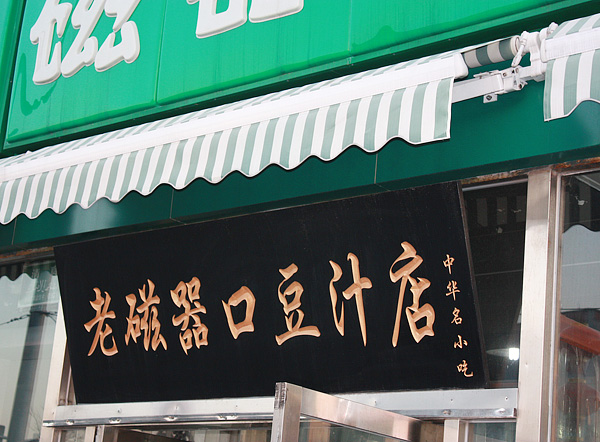
Lao Ciqikou Douzhir Dian, Beijing restaurant
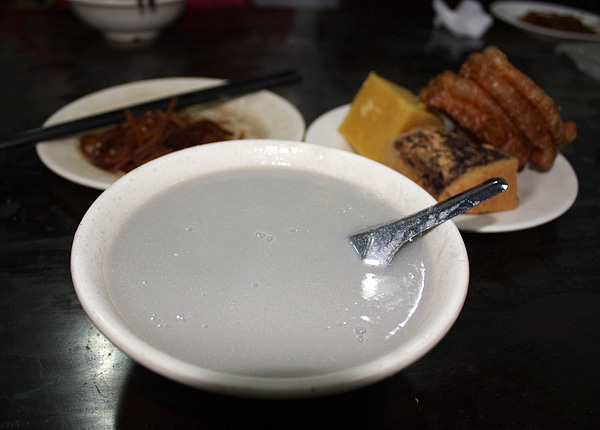
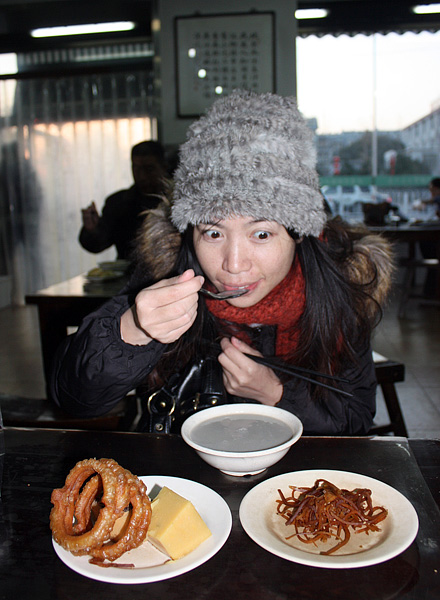
Our friend in Beijing recommended a snack shop to us which has a history of tens years – Lao Ciqikou Douzhir Dian. This shop locates at North exit of Temple of Heaven, so after the visit to Temple of Heaven, we went to this shop. It was easy to find it out as there were many people standing in line there. Finally we got our Douzhir and its mate Jiaoquan (fried flour ring), some pickled mustard tuber. Firstly, wow, it tasted really different with soybean milk. I still didn’t know why Beijingers like this. Secondly, I didn’t like to waste food, so drank it up slowly. At last, I said it might be not that bad. A lady who shared a table with us recognized that we were tourists from other province; we were told that she started to drink Douzhir when she was a little girl and now couldn’t leave it anymore. Also, she insisted that Douzhir was very good to health.

Douzhir, Beijing snack food

Douzhir, Beijing snack food
It was interesting to taste local food and we thought food was a very important part of our trip. Douzir, maybe one day I will be addicted to you.

Wednesday, 26 December 2012

Beijing to offer 72-hour visa-free stay for transit travellers

Beijing will start a 72-hour visa-free stay policy for citizens of 45 countries in 2013 to boost tourism, Beijing municipal government announced on December 5.

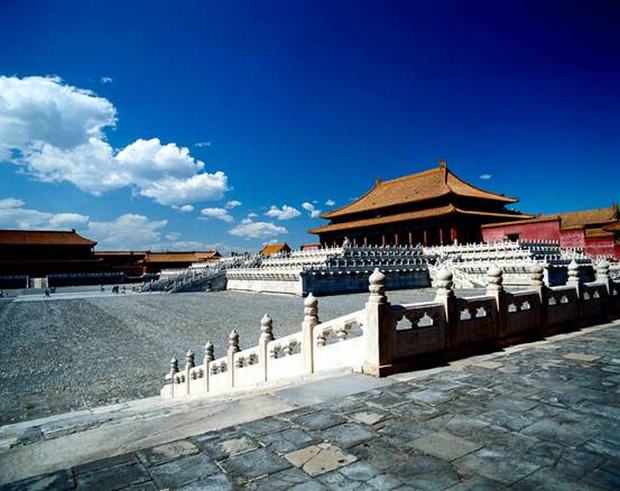
the Forbidden City, Beijing, China
 the Forbidden City, Beijing, China


From Jan. 1, 2013, foreigners from 45 countries, landing in Beijing but destined for other countries, can hold third country visas and plane tickets to apply for a transit without visa (TWOV), at Beijing Capital International Airport. They will be able to stay in Beijing for 72 hours without a Chinese visa.

The 45 countries were listed in accordance with the numbers of inbound overnight visitors in Beijing from 2009 to 2011.
Austria Hungary Portugal Cyprus Chile
Belgium Iceland the Republic of Slovakia Bulgaria Australia
the Czech Republic Italy the Republic of Slovenia Romania New Zealand
Denmark Latvia Spain Ukraine the Republic of Korea
Estonia the Republic of Lithuania Sweden the United States of America Japan
Finland Luxembourg Swiss Canada Singapore
France the Republic of Malta Russia Brazil Brunei
Germany the Netherlands the United Kingdom of Britain Mexico the United Arab Emirates
Greece Poland the Republic of Ireland Argentina Qatar

Beijing Capital International Airport is the only entry-exit port applicable for the policy. And, the 72 hours will be calculated starting from the moment visitors get their transit stay permits.

Transit visitors have to carry identity documents with them while traveling during the 72 hours, and register at a police station with their documents within 24 hours of their arrival. Moreover, they will be not allowed to leave Beijing to other Chinese cities during the 72 hours, and have to depart from Beijing.

The visa-free policy is aimed at making Beijing more accessible to the world; and, more importantly, it is expected to attract more international travelers. Within a three-day stay, people are free to visit Beijing's well-known tourist spots, go shopping, and sample the local cuisine.

Monday, 12 March 2012

Beijing Impression


"...the city remains an epicenter of tradition with the treasures of nearly 2,000 years as the imperial capital still on view—in the famed Forbidden City and in the city's lush pavilions and gardens..."
                                                       — National Geographic

Beijing is the capital of China, and also the nation's political, educational and cultural centre. Its history can dates back several thousand years. Stop-start capital since the Mongol Yuan dynasty (1271 - 1368), it has been the heart of China's history for centuries. The city name, from the Chinese characters 北 for north and 京 for capital, means literally the "Northern Capital". For travelers, Beijing is truly awe-inspiring with its epic imperial grandeur.

The Forbidden City - Fourteen emperors of the Ming Dynasty (1368- 1644) and ten emperors of the Qing Dynasty (1644 - 1911) lived and ruled China in this palace for as long as 490 years from 1421 to 1911.

The Great Wall, one of the world's most popular tourist attractions, is 3,333 miles long and was built, section by section, between the 5th century BC and 16th century AD.

Temple of Heaven, literally the Altar of Heaven, served as a vast stage for solemn rites performed by the Emperors of the Ming and Qing dynasties, who prayed here for good harvests, and sought divine clearance and atonement.

Summer Palace - the largest and best-preserved royal garden in China. it was once a summer retreat for Empress Dowager Cixi, combining palace temples, gardens, pavilions, hill and lakes.

Beihai Park is the capital's oldest imperial garden, with an 800-year history. It's a relaxing place to stroll around, or go boating on the lake.

Yonghe Lamasery - the most renowned Tibetan Buddhist temple outside Tibet. It was converted to a lamasery in 1744 after serving as the former residence of Emperor Yong Zheng.

Prince Gong's Mansion - one of Beijing's largest private residential compounds. It shows how the upper class lived during the Qing Dynasty.
Ming Tombs are the final resting place of 13 of the 16 Ming Emperors. At the gate of the tomb area stands a marble archway which leads to the Sacred Road linced by 12 pairs of stone animals followed by 6 pairs of stone civil and military officials on both sides of the way.

Old Summer Palace, known in China as Yuan Ming Yuan, was an extremely large complex of palaces and gardens next to Summer Palace. After it was torched by invading British and French forces in 1860, a melancholic array of broken columns and marbel chunks remain.

Importantly, a journey into the city's Hutong - the traditional living quarters of the locals; and pay a family visit to the old walled Siheyuan (a compound with houses around a courtyard). From spring to autumn, Beijing residents collect outside their gates, drinking beer, playing chess, and... After a hutong tour, it is the time for you to enjoy local flavour snacks. Some of the cheapest and most delicious meals can be had on the streets. Whatever you taste, a Peking roast duck dinner is an essential part of your visit to Beijing - another one is climbing the Great Wall. Peking duck has the reputation of being the most delicious Beijing food. It is mostly prized for the thin, crispy skin, though the meat is fat, it is tender and tasty, not greasy. In the evening, a Peking Opera show would be a good choice to entertain you. The show combines singing, musical dialogue, martial arts and fantastic coustumes. It is widely regarded as the highest expressionof the Chinese culture.